13-Tonne Digger Bucket Line Boring – Worn 65mm Pin Bores Restored
Digger Bucket Line Boring and Bore Welding
Worn, oval pin bores on a digger bucket can be bore welded and line bored back to size, so new pins fit tight and true and there is no need for a new bucket. Simply Welding repaired the worn 65mm pin bores on a bucket from a 13-tonne excavator. The bores had worn oversize and out of round. We welded them up and line bored them back to size in our workshop, keeping both pairs of ears in line.
Job Description
We repaired the worn, unbushed 65mm pin bores on a 13-tonne excavator bucket by welding them up and line boring them back to the correct size, keeping both pairs of ears in line with each other.
Cause of the Damage
Over time, movement between the pins and bores had worn the bores oversize and oval. This let the pins rattle, wore them further and made the bucket sloppy on the machine.
Inspection and Measuring
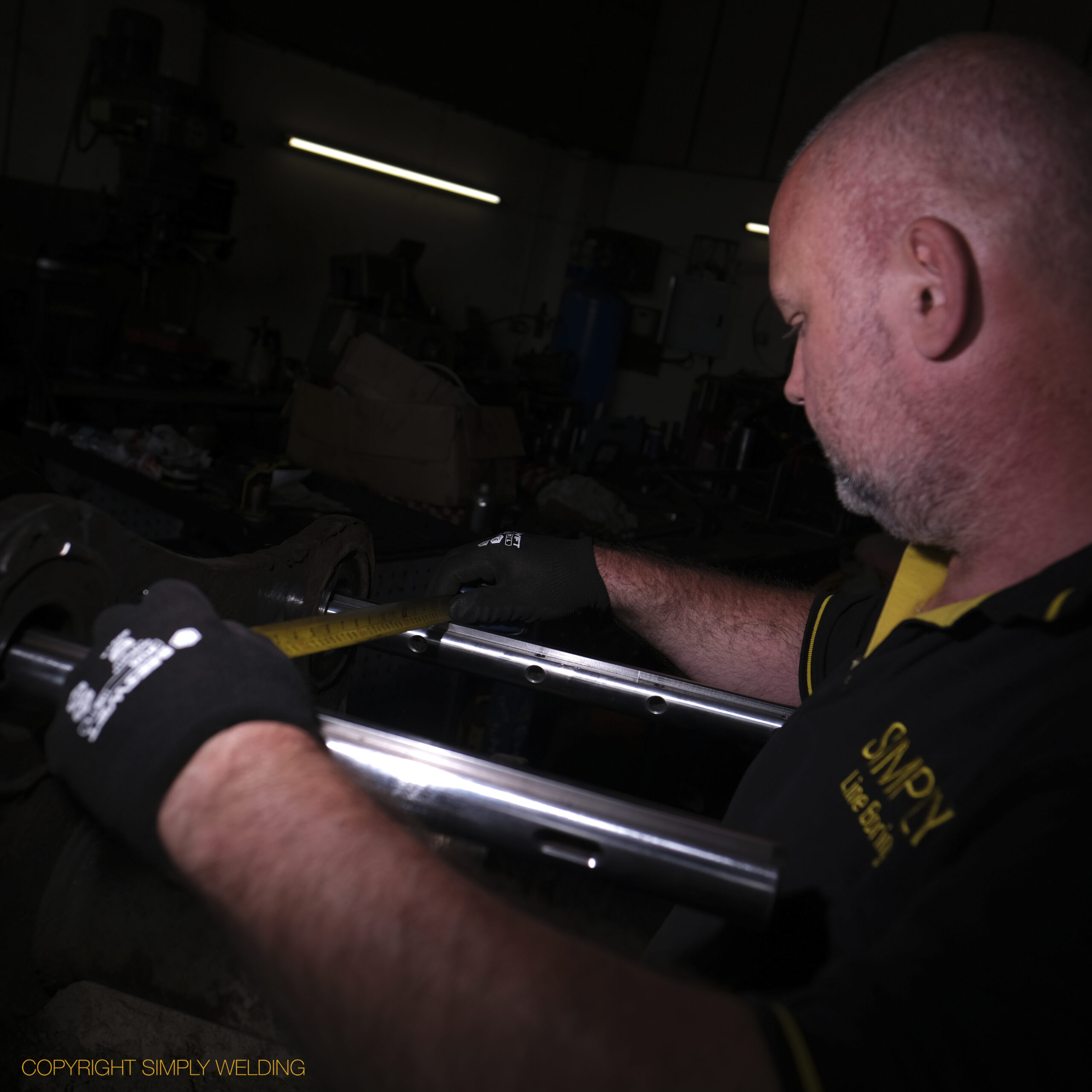
Each bore was measured and the readings were marked up on the bucket, so we knew how much each one had worn and how much material needed to go back in.
Welding
The worn bores were built back up with weld, leaving enough material to bore them out cleanly to size.
Setting Up
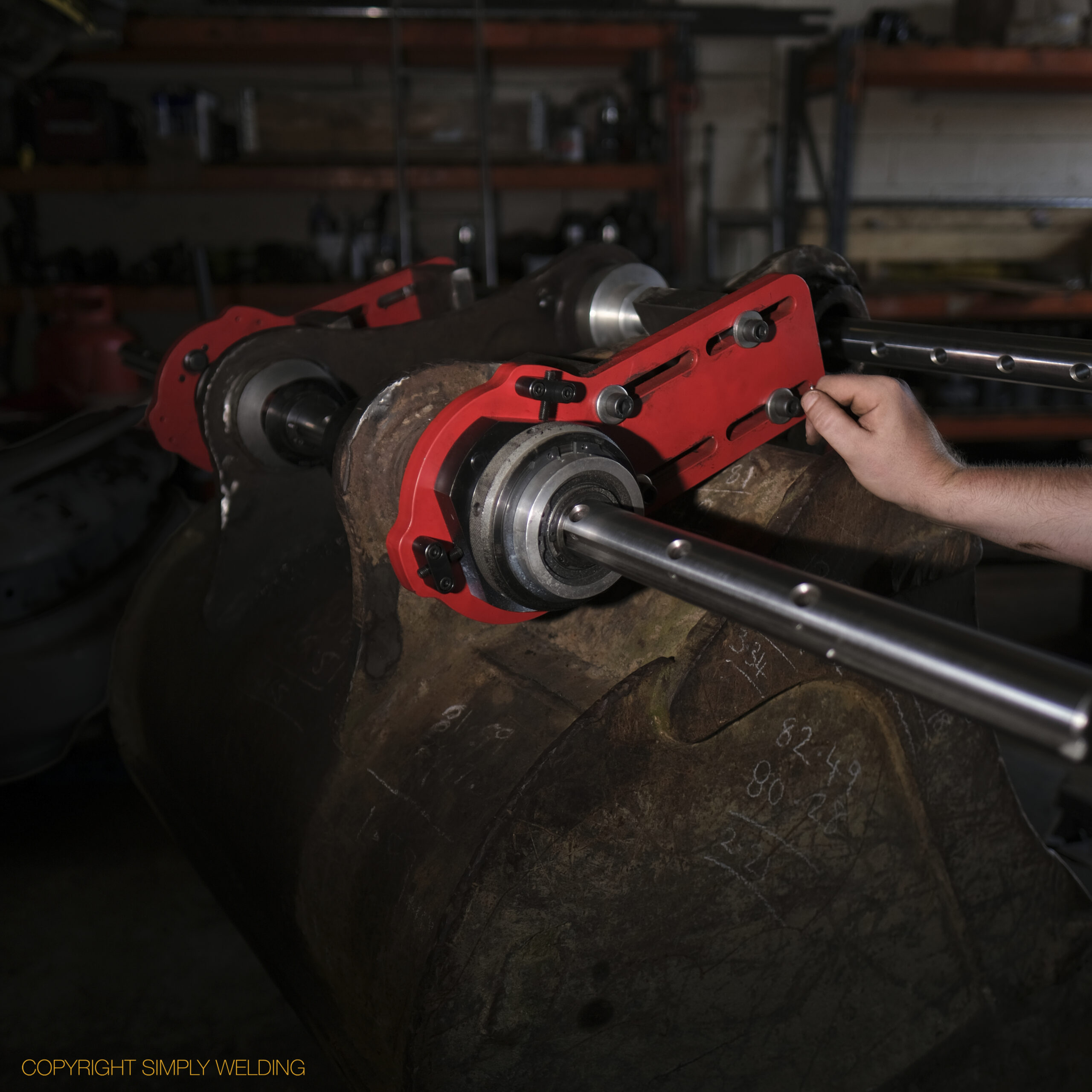
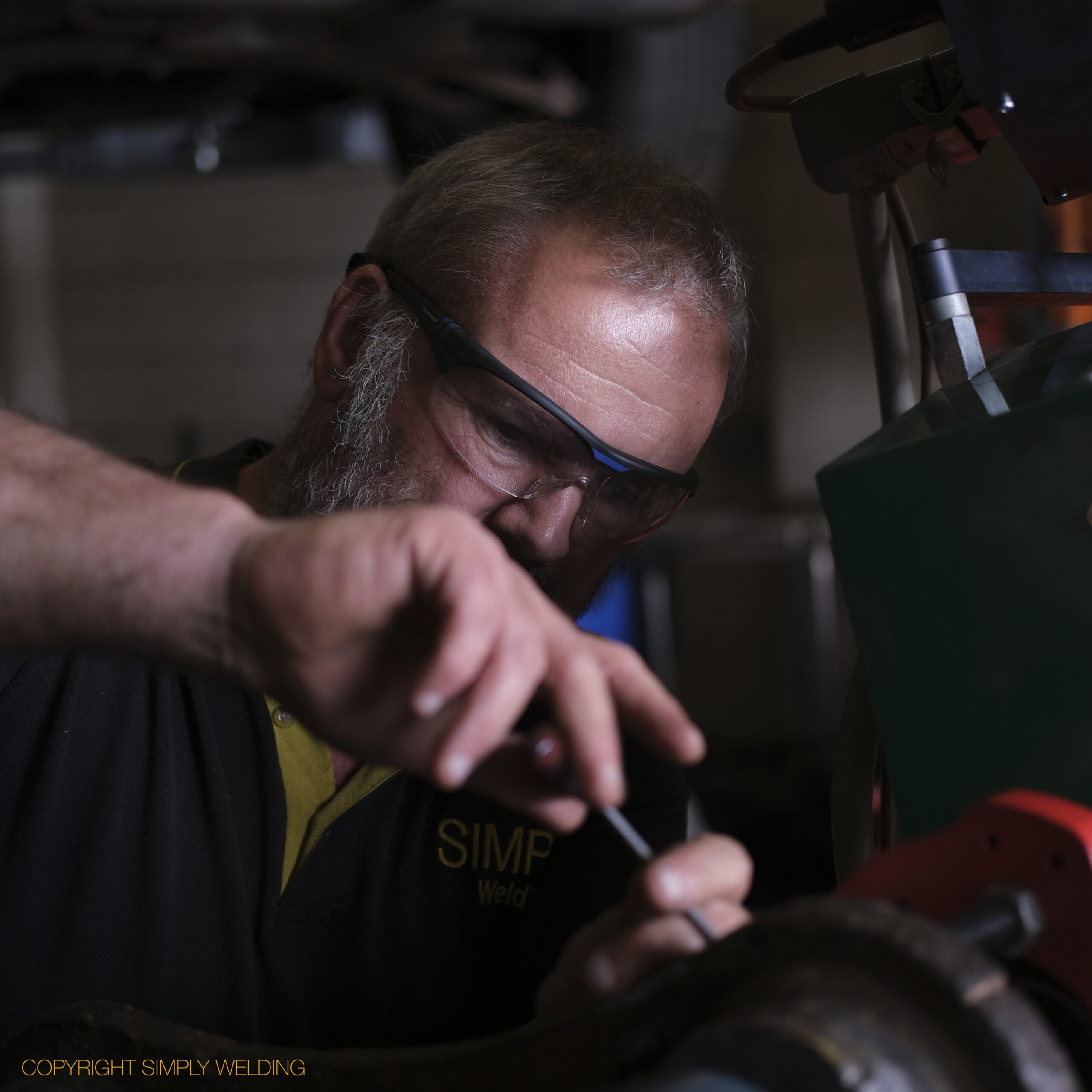
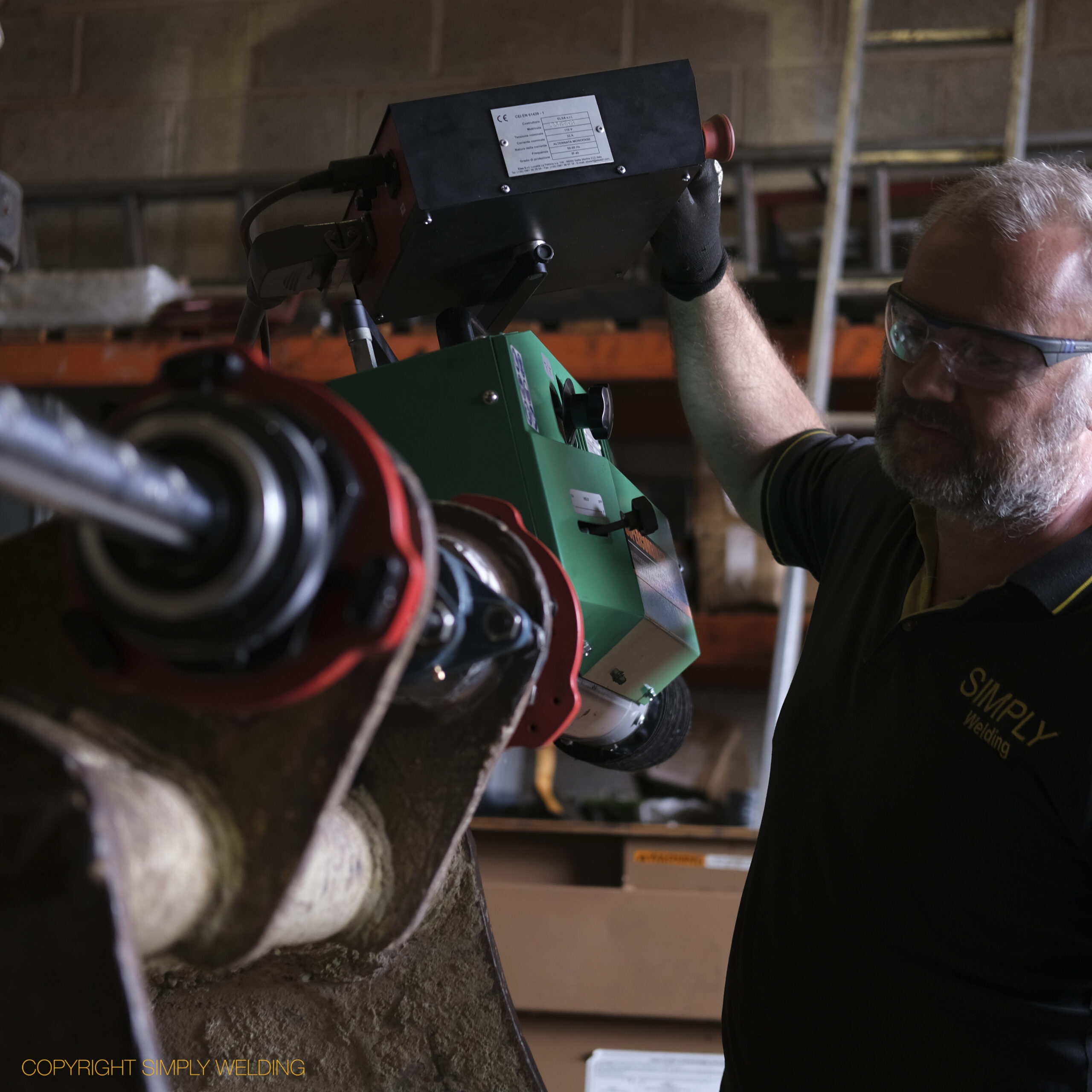
Boring bars were passed through both pairs of bucket ears and roughly centred with alignment cones. Once a rough centre was established, we fine-tuned the set-up using dial test indicators (DTIs) and verniers, measuring from a fixed datum point. The line boring machine was then bolted to the bucket with its mounting arms, keeping the bar true through each pair of bores.
Line Boring
Each bore was machined back to 65mm in line, with the swarf cleared and the sizes checked as we went. The bores are unbushed, so they were finished to an H9 tolerance (65.000mm to 65.074mm), a locational clearance fit, giving a slip fit: the new pins slide in by hand, while staying tight enough to prevent premature wear and slop in heavy work.
Result
The bores were back to size and in line, ready for new pins, which we made in-house. The bucket went back to work tight on the machine, with no need for a new bucket.
Frequently Asked Questions
How do I know if my digger bucket needs line boring?
Common signs are pins that rattle, a bucket that feels sloppy on the machine, and pins that keep wearing quickly. These usually mean the bores have worn oversize or oval and need welding up and line boring back to size.
Is it cheaper to line bore a bucket in a workshop?
Generally, yes. Line boring in our workshop is usually cheaper than on site, and the savings easily outweigh the transport costs. Buckets and other parts can be brought in, or we can collect anything up to 6 metres long and 2 tonnes.
Do you also line bore on site?
Yes. We offer mobile line boring across pretty much the whole of the Midlands, and we are happy to travel further if we can fit the job into our normal schedule.
How do you keep the bores in line?
Boring bars are passed through both pairs of bucket ears and roughly centred with alignment cones. The set-up is then fine-tuned with dial test indicators and verniers, measuring from a fixed datum point, before the line boring machine is bolted to the bucket to keep the bar true through each pair of bores.
Can you make new pins for the bucket?
Yes. The new pins for this bucket were made in-house in our workshop, so the bucket went back with new pins to suit the freshly bored holes.
What fit should an unbushed bucket pin bore have?
On this 13-tonne bucket, the unbushed 65mm bores were finished to an H9 tolerance (65.000mm to 65.074mm), a locational clearance fit, so the new pins slide in by hand. That leaves enough clearance to fit the pins, while staying tight enough to prevent premature wear and slop during heavy work.
Want to see more of what we do?
Case Studies | Gallery
Worn pins and bores on your bucket? Call 07747 682451 or send us some photos via WhatsApp.