Kinshofer 331 Brick Grab Crack Repair After a Failed LOLER Inspection
Kinshofer Brick Grab Failed LOLER – Cracked Vertical Legs
A Kinshofer brick grab that fails its LOLER inspection with cracking can usually be repaired rather than replaced. Simply Welding repaired a Kinshofer 331 brick grab for a Walsall builders merchant after it failed its LOLER thorough examination. The grab was used on a lorry-mounted crane. The inspector, a completely independent one we had not worked with before, found micro cracking on the vertical legs and specified that the repair had to be carried out by a coded welder. The customer contacted us one day, we had the grab in and repaired the next, and it passed its re-inspection and went back to work the day after.
Job Description
Repairing micro cracking on the vertical legs of a Kinshofer 331-1200-4H brick grab (1,800kg capacity) used on a lorry-mounted crane, so it could pass its LOLER re-inspection.
Finding the Full Extent of the Crack
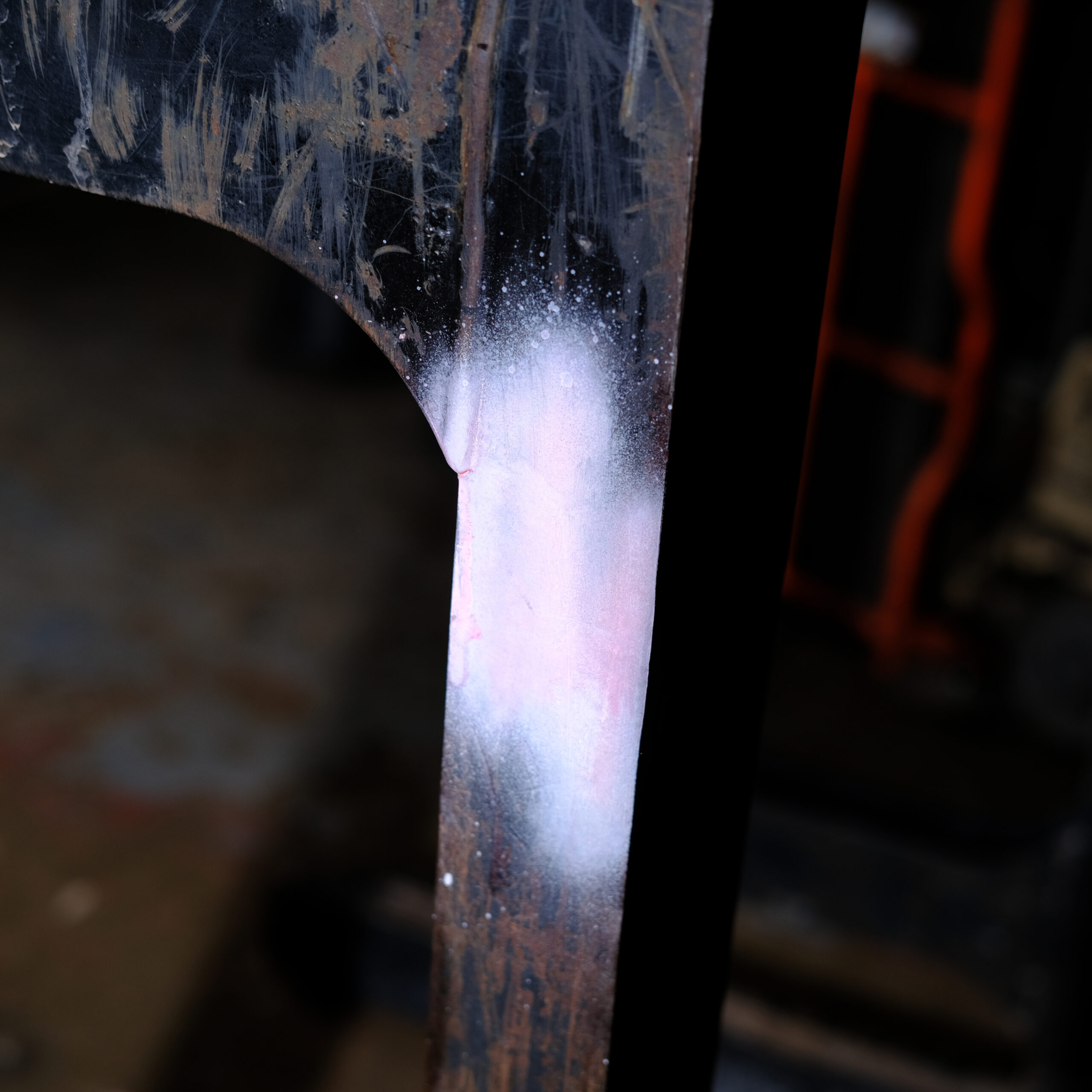
We ground the paint off the cracked area, then applied crack dye penetrant and developer to show exactly where the crack ran and where it ended. The crack was 25–30mm long.
Stopping the Crack
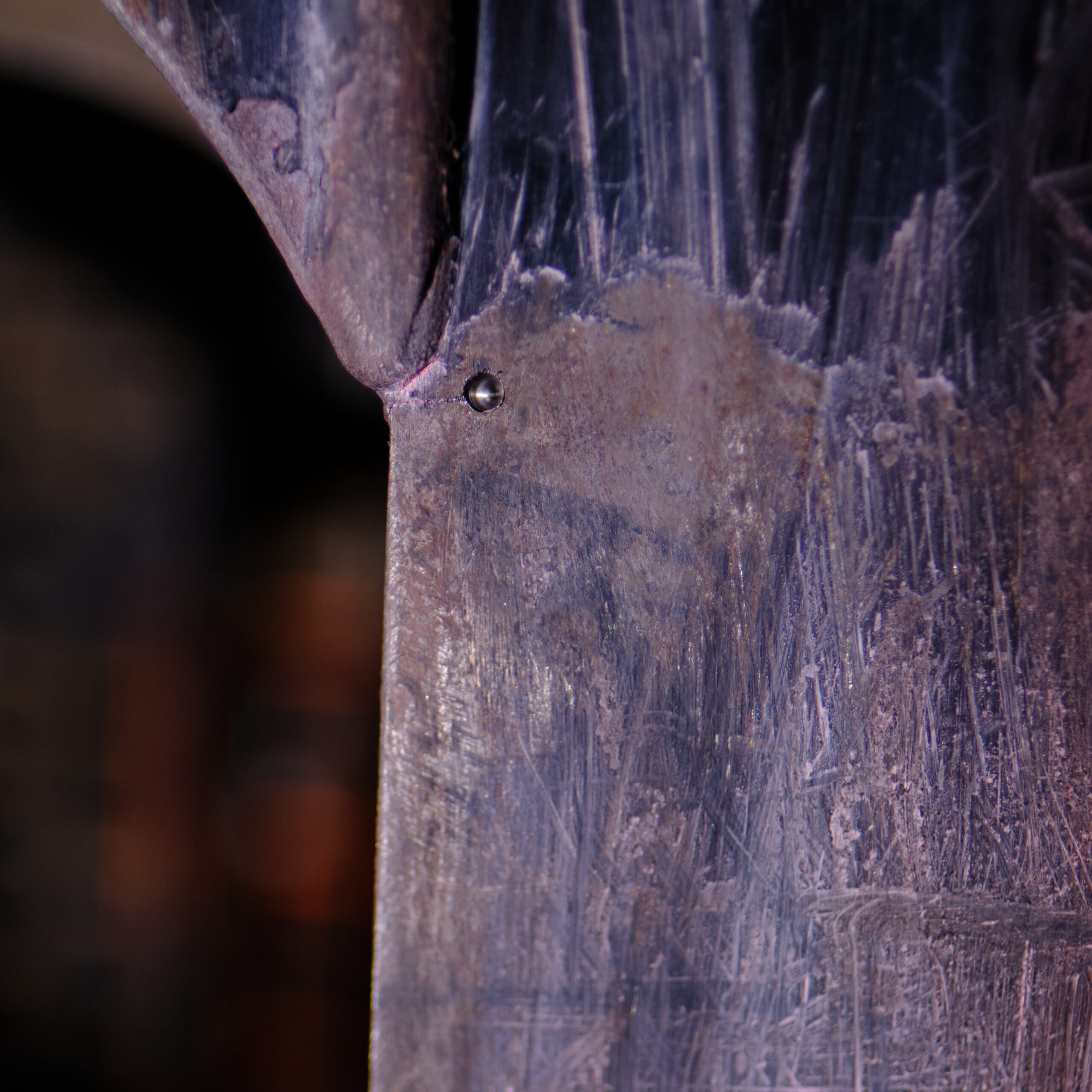
Once we had found the end of the crack, we drilled a 4mm hole at its tip. This stopped the crack from travelling any further while the repair was carried out.
Grinding Out and Weld Preparation
The crack was ground out back to sound metal and the area was prepared for welding.
Pre-heating, Welding and Slow Cooling
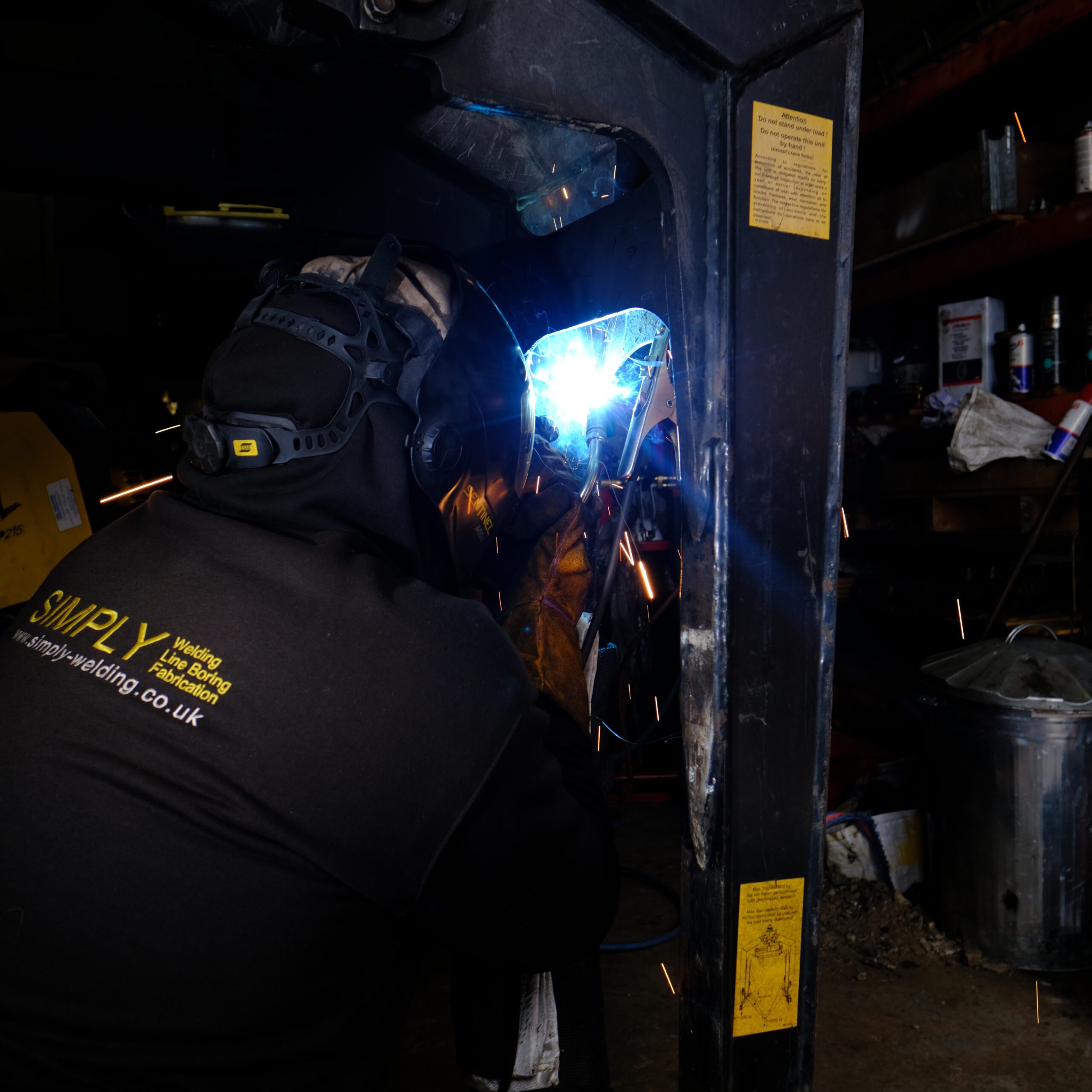
The area was pre-heated with a gas torch and welded by our coded welder using Elgacore metal-cored wire. It was then wrapped in a welding blanket and left until it had cooled right down to ambient temperature. Slow cooling stops the weld and the surrounding steel turning brittle and cracking again.
Checking Our Own Work
We ground back the welds and checked them over. We found a small pinhole, so we ground out that area again, re-welded it and wrapped it in a welding blanket once more until it was back at ambient temperature. On lifting equipment, nothing gets left to chance.
Final Prep
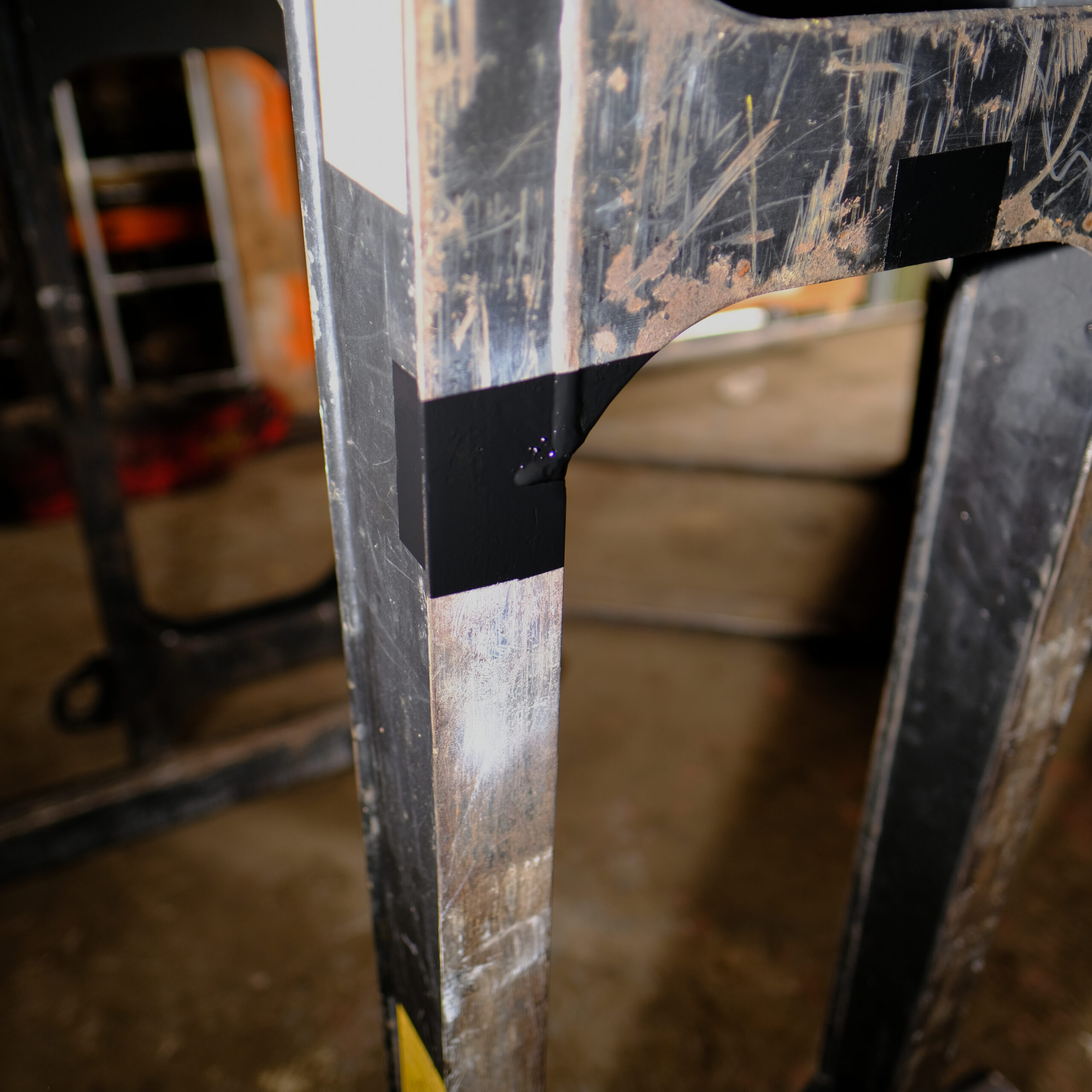
The repaired area was painted and the grab was ready for collection.
Result
The brick grab was collected, re-inspected and passed its LOLER inspection. It went back to work the next day.
Frequently Asked Questions
Can a cracked brick grab that failed its LOLER inspection be repaired?
Yes. In most cases the crack can be found with dye penetrant testing, stopped with a drilled hole, ground out and re-welded by a coded welder, then re-inspected.
Do I have to use your LOLER inspector?
No. This job was failed by an independent inspector we had never met, and we carried out the repair to their requirements. We also carry out LOLER inspections ourselves if you need one.
Why drill a hole at the end of a crack?
A crack concentrates stress at its tip, which makes it grow. Drilling a small hole at the tip spreads that stress out and stops the crack travelling while it is repaired.
Why leave the weld under a welding blanket until it is cold?
Cooling slowly stops the weld and the steel around it hardening and turning brittle, which is what can cause a repair to crack again. On this grab, the blanket stayed on until the repair was back at ambient temperature.
Who can repair lifting equipment that has failed LOLER?
The inspector can set requirements for the repair. On this job the independent inspector specified a coded welder, and the repair was carried out by our coded welder before the grab was re-inspected.
How quickly can you repair a brick grab?
It depends on the damage and our workload, but this grab was in and repaired the day after the customer first contacted us, and back at work the following day.
Want to see more of what we do?
Case Studies | Gallery
Lifting equipment failed its LOLER inspection? Call 07747 682451 or send us some photos via WhatsApp.