Hitachi 20t Excavator Tipping Link Line Boring – Worn Bores Restored to Size
Line Boring and Bore Welding Excavator Tipping Links to Factory Spec
Line boring restores worn pin bores on excavator tipping links back to size, with the pin centres spot on, without buying new links. Simply Welding bore welded and line bored three pairs of worn tipping links from a Hitachi 20t quarry spec excavator in our workshop. We take line boring work from well beyond the local area. Parts up to 6 metres long and 2 tonnes can be brought in or collected, and workshop line boring is generally cheaper than on-site work, with savings that easily outweigh the transport costs.
Job Description
We repaired worn and damaged pin bores in three pairs of tipping links from a Hitachi 20t quarry spec excavator, with 70mm and 80mm bores on 630mm pin centres.
Setting Up the Line Boring Equipment
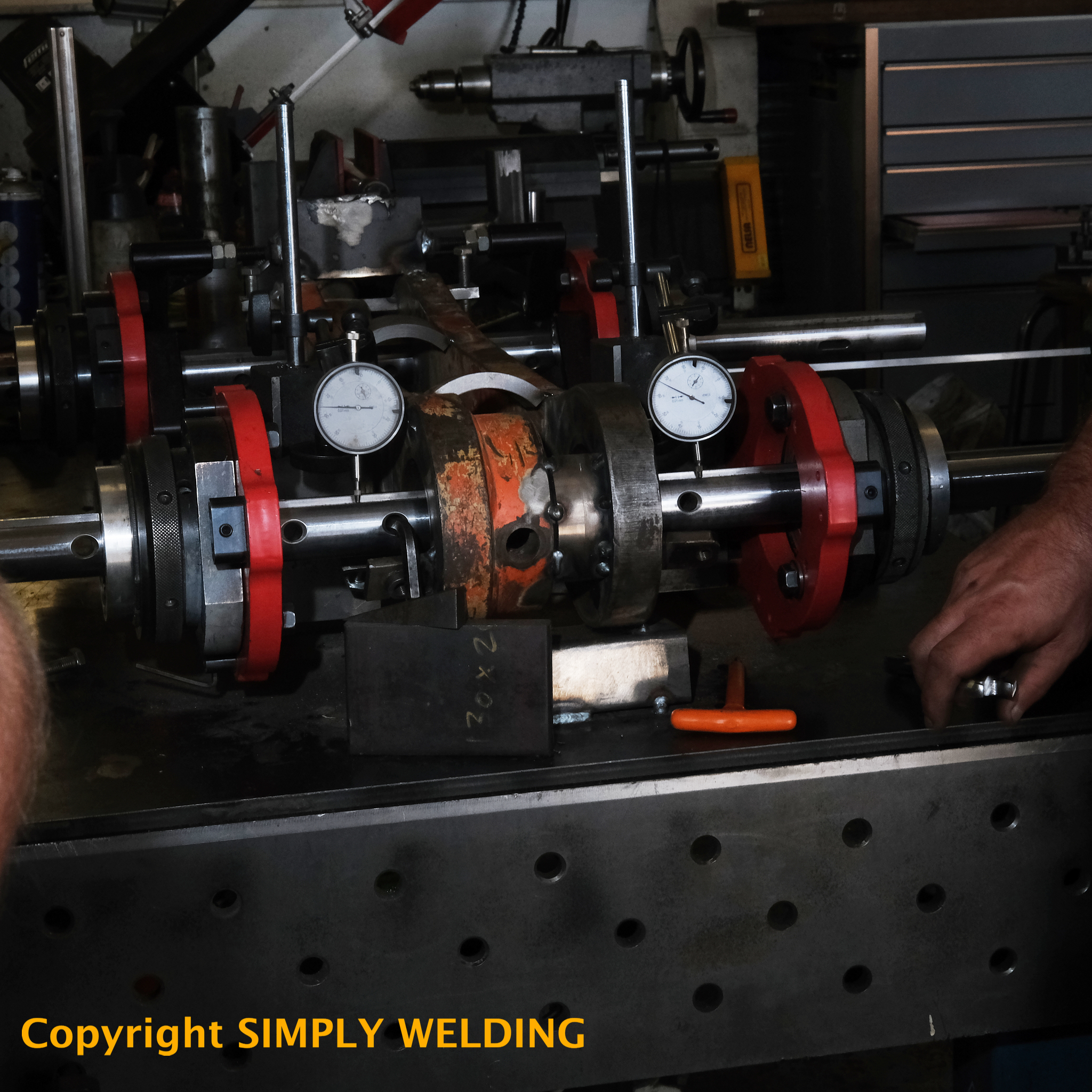
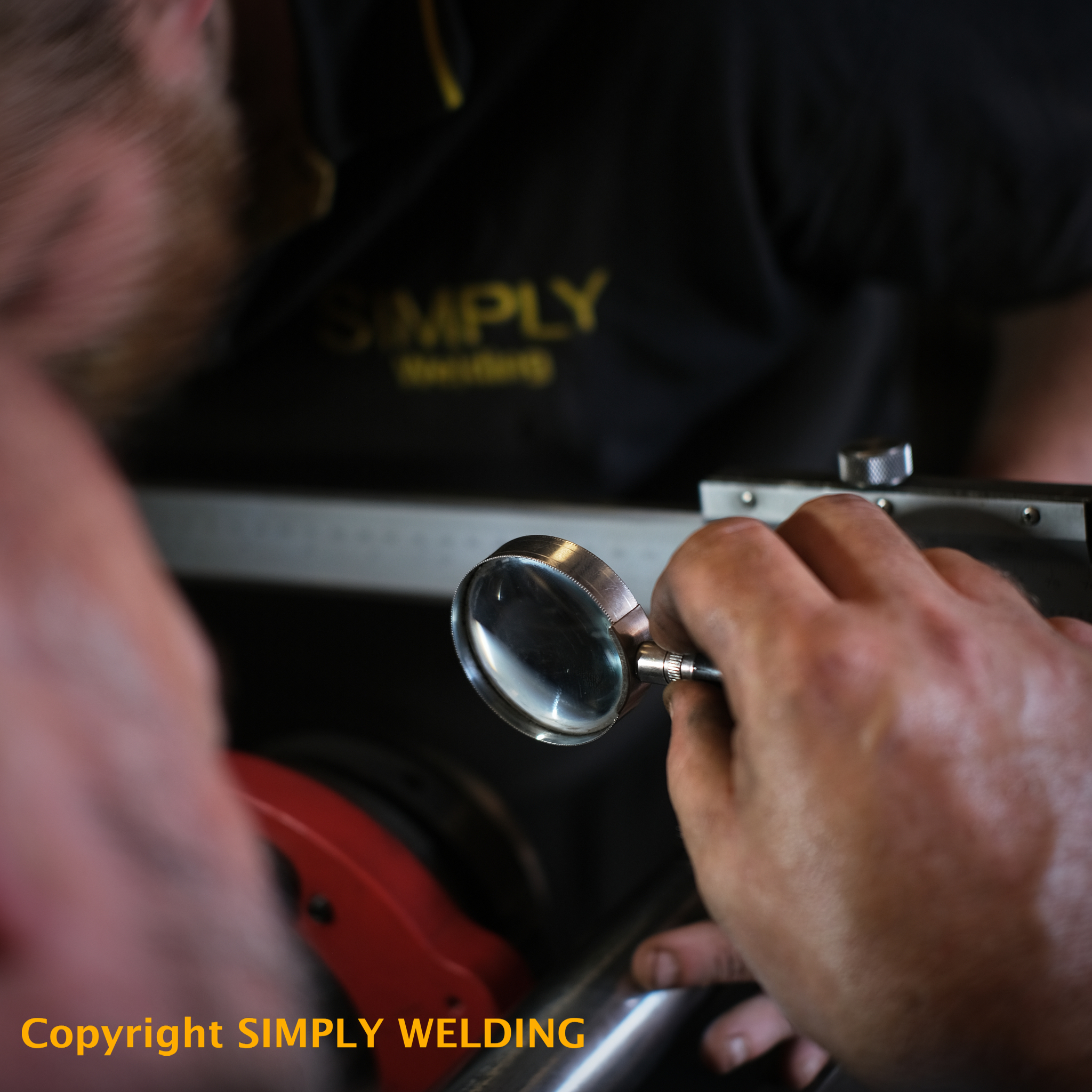
The links were done in pairs. First, they were cleaned up and de-burred. Each pair was spaced using heavy-wall hydraulic tube, machined on our lathe so both ends of each link matched exactly. The links were then mounted and jigged on our fabrication table, setting each pair accurately for pin centres, with both bores running as parallel and square to the machined faces as possible. The links had slight bends and twists, so we picked a datum and worked back from it. The boring bars were aligned for parallelism and checked to make sure they were running concentric, using dial test indicators, digital levels and verniers. We even used a magnifying glass to read the vernier scale, as these measurements had to be absolutely spot on.
Bore Welding and Line Boring
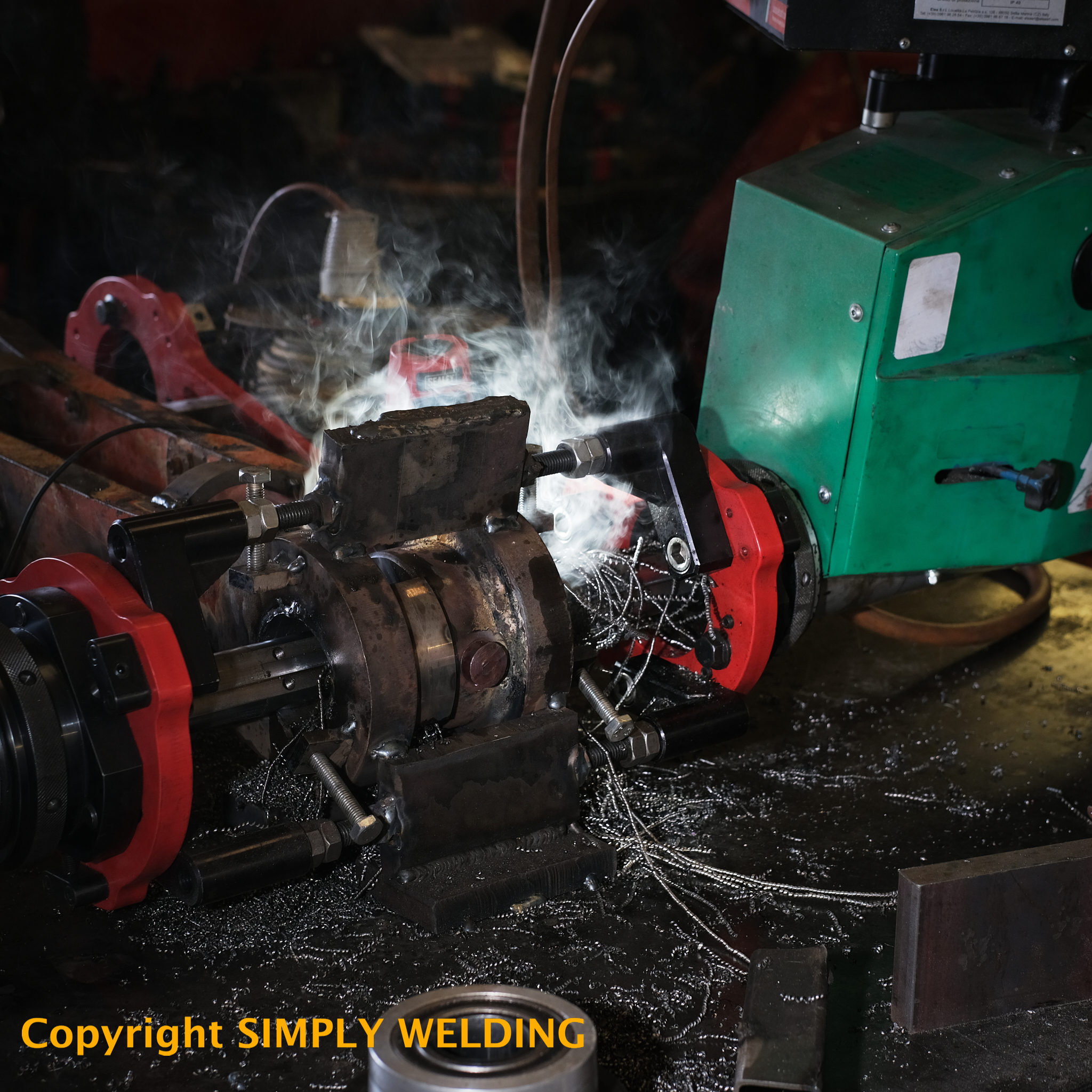
The links were pre-bored oversize, back to clean, sound parent metal, then bore welded and left to cool. Once cool, they were line bored to size over 4–5 passes, with a final pass of around 0.5mm for a clean, smooth finish. The links are unbushed, so both the 70mm and 80mm bores were finished to a tolerance of +0.00mm to +0.03mm, giving a light hammer fit directly over standard 70mm and 80mm grease pins.
Extra Work
Each link had 20mm through holes for the pin retaining bolts. These were plugged before boring and re-drilled once line boring was complete.
Final Prep
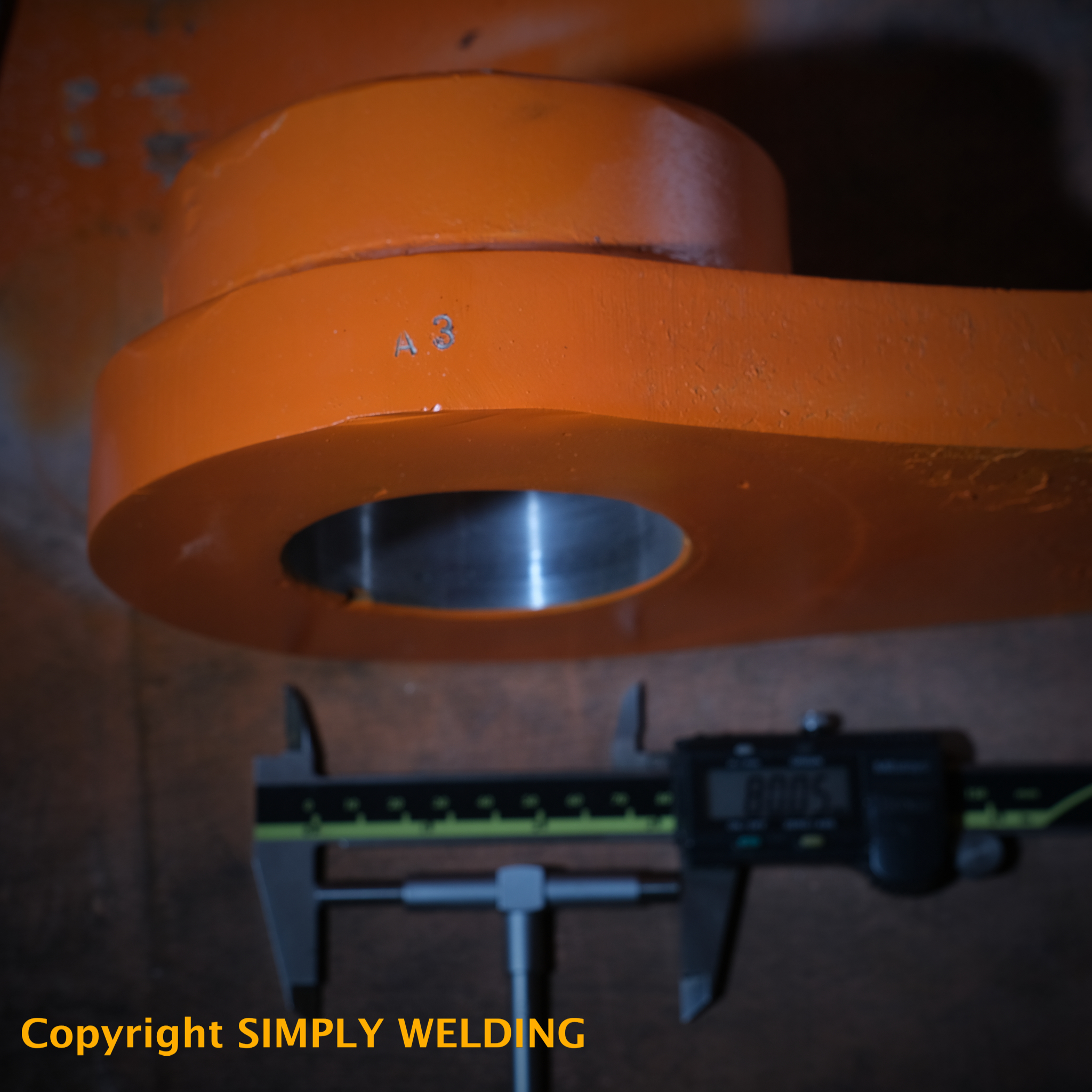
All finished bores were measured for size and tolerance and the pin centres checked. Any exposed steel was painted, and the links were palletised and shipped back to the customer.
Result
All three pairs went back to the customer, with the bores back to size and the pin centres spot on.
Frequently Asked Questions
What is line boring?
Line boring is a machining process that restores worn or oval pin bores on plant and machinery. The worn bores are bore welded, then machined back to their original size with a boring bar, keeping each pair of bores in line, parallel and on the correct pin centres.
Do you line bore parts from outside your local area?
Yes. Line boring work can be brought into our workshop, or we can collect anything up to 6 metres long and 2 tonnes. Line boring in our workshop is generally cheaper than on site, and the savings easily outweigh the transport costs.
Do you offer mobile line boring, and what areas do you cover?
Yes. We provide mobile line boring across pretty much the whole of the Midlands, and we are happy to travel further if we can fit the job into our normal schedule.
Can bent or twisted tipping links be line bored?
Yes. These links had slight bends and twists, so we picked a datum and worked back from it, setting each pair for pin centres with both bores running as parallel and square to the machined faces as possible.
How accurate is the finished bore?
The bores were line bored to size over 4–5 passes, with a final pass of around 0.5mm for a clean, smooth finish. As the links are unbushed, the 70mm and 80mm bores were finished to a tolerance of -0.00mm to +0.03mm for a light hammer fit directly over standard grease pins. Every finished bore was measured for size and tolerance, and the pin centres were checked before the links went back to the customer.
Want to see more of what we do?
Case Studies | Gallery
Worn pin bores on your excavator links or dipper? We line bore in our workshop or on site, and can collect parts up to 6 metres and 2 tonnes. Call 07747 682451 or send us some photos via WhatsApp.