Hydraulic Ram Leaking From the Gland Nut – Stripped, Resealed and Tested
Hydraulic Cylinder Leaking from the Gland Nut
A hydraulic ram leaking oil between the gland nut and the cylinder tube is usually caused by a failed O-ring on the gland nut. The O-ring deteriorates with age, or it can be damaged by hydraulic dieseling, which is often linked to cavitation. Simply Welding repaired a hydraulic cylinder that was leaking oil from the gland nut. We stripped it, fitted a full seal kit, pressure tested it and had it back with the customer the same day.
Job Description
A hydraulic cylinder came in leaking oil from the gland nut and was stripped, resealed and pressure tested.
Parts Used
A full seal kit only. All other parts were serviceable.
Bench Testing the Ram
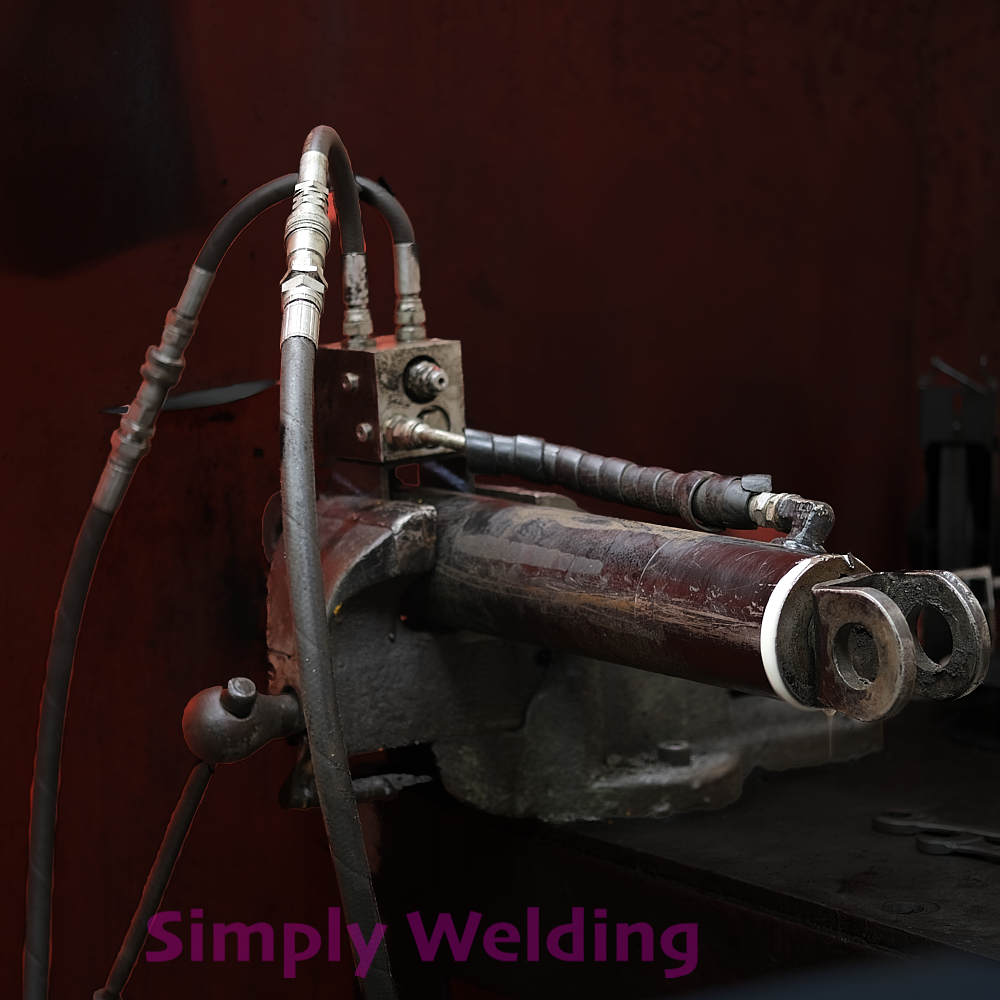
The ram came in with little information beyond the customer saying it was leaking. Initial testing showed oil leaking from the joint between the gland nut and the hydraulic cylinder tube.
Stripping the Ram
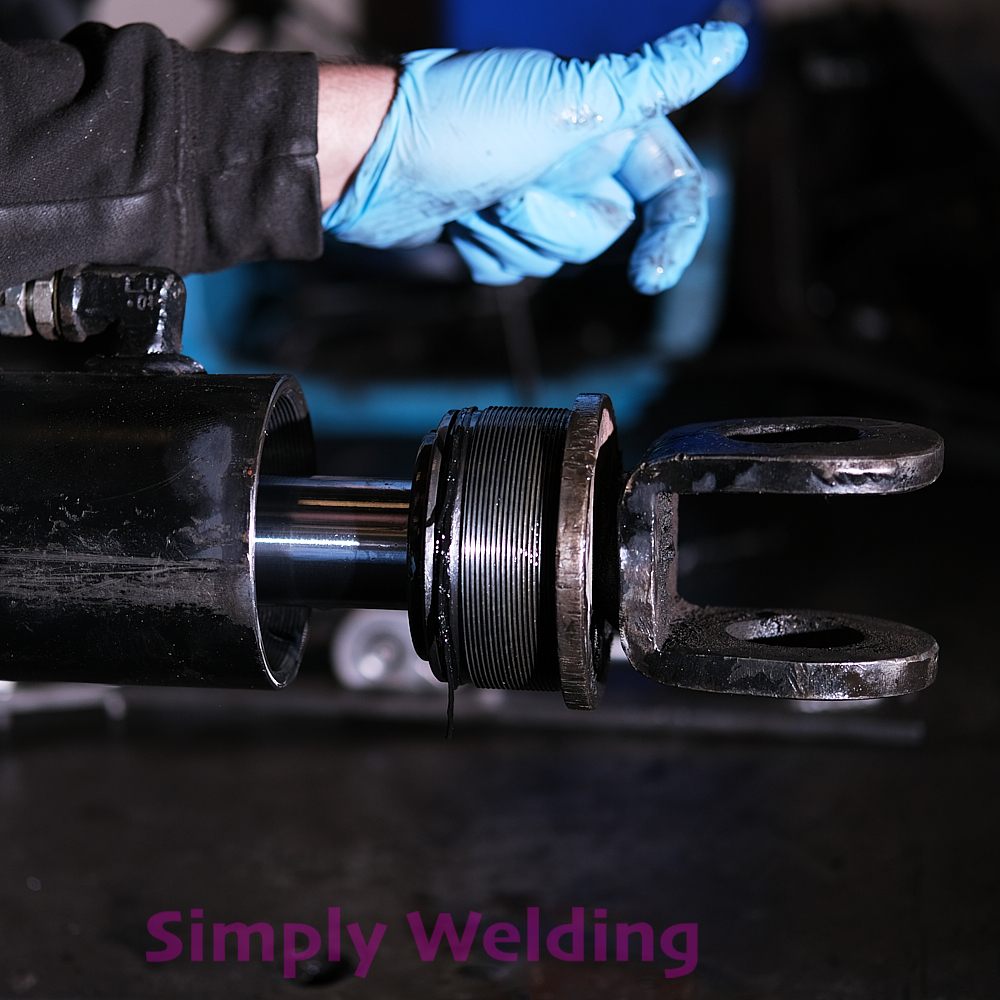
The gland nut was undone and the rod, gland and piston were pulled out as one assembly. The grub screw at the base of the piston was removed, the piston was taken off, and the gland nut was slid off the rod.
Inspecting the Components
The O-ring on the gland nut had deteriorated, which was the cause of the leak. The tube was checked for damage to the bore and threads, and for hairline cracks around the inlet and outlet ports. Any suspected cracks were checked with penetrant dye and developer. The gland nut was checked for impact damage and wear, particularly at the wiper seal groove, which is at the front of the nut and is often damaged. The rod was checked for damage and score marks, the clevis for security and elongated pin bores, and the piston thread for damage.
Re-assembly
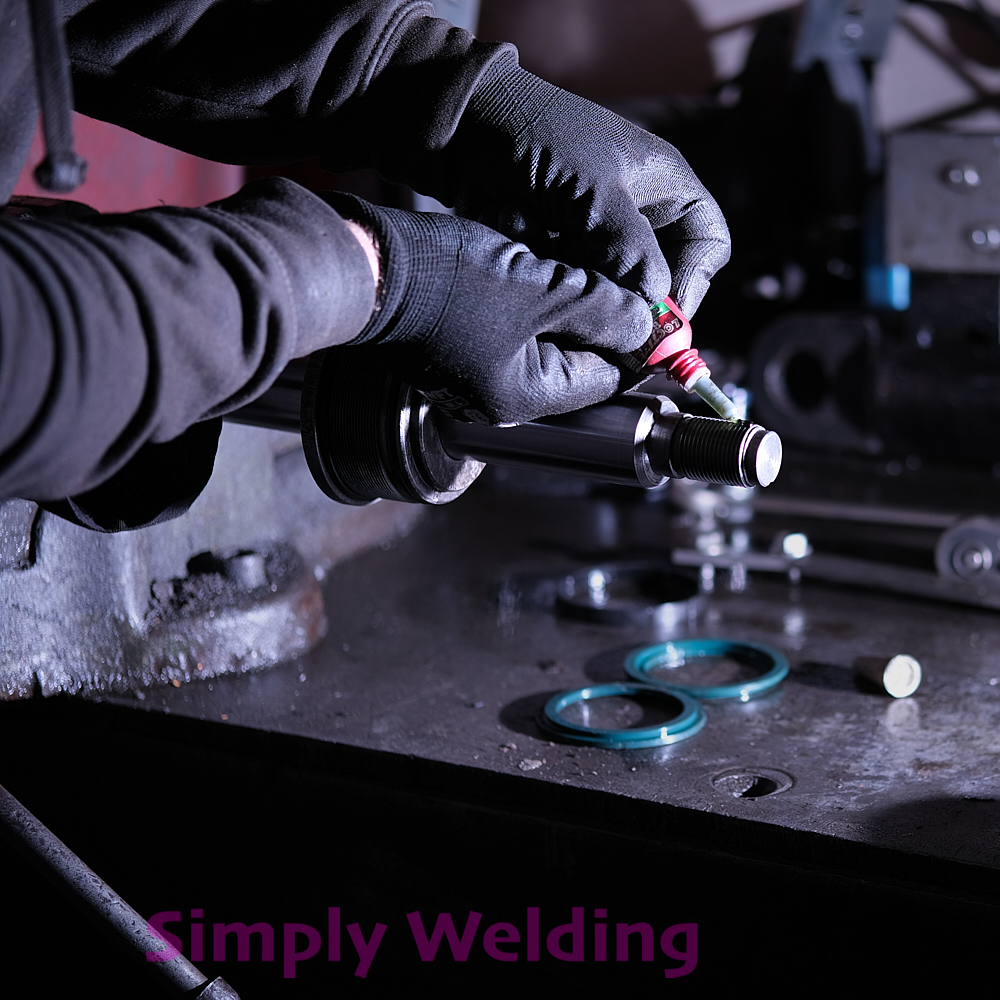
With all components passed as serviceable, the cylinder was rebuilt with a full set of new seals, as we do with every cylinder we strip. A new seal kit was fitted to the gland nut, which was slid onto the rod, and new seals were fitted to the original piston. Thread lock was applied to the rod-to-piston threads, then the piston was screwed onto the original rod, torqued to the set value and loaded into the pre-lubricated tube. The gland nut was then screwed in and torqued to the set value.
Pressure Testing
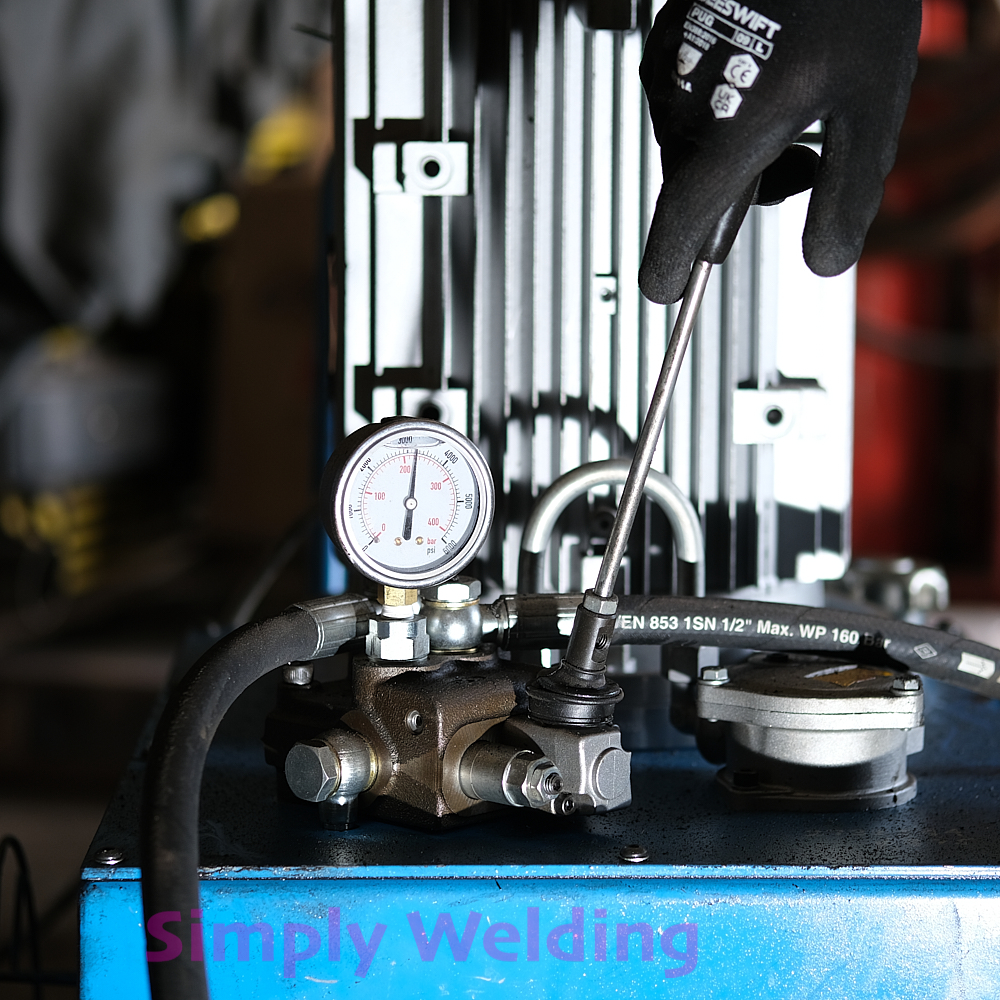
The ram was first run on air to check for low-pressure leaks, then given an operational test. It was taken to full working pressure plus 15% and held on the pump for 30 minutes, and three full test cycles were completed.
Result
The ram was resealed, tested leak-free and back with the customer the same day.
Frequently Asked Questions
Why does a hydraulic ram leak from the gland nut?
Oil leaking between the gland nut and the cylinder tube is usually caused by the O-ring on the gland nut breaking down. This happens with age, or it can be a symptom of hydraulic dieseling, often linked to cavitation. Hydraulic dieseling happens when air gets trapped in the hydraulic oil. As the ram works, those air bubbles are squeezed so hard and so fast that they heat up and ignite, in much the same way as the fuel in a diesel engine. These tiny explosions inside the cylinder burn, harden or crack the seals, and the ram starts to leak.
Can a leaking hydraulic ram be repaired the same day?
Usually, yes. If the tube, rod, piston and gland nut are serviceable, the ram can be stripped, fitted with a full seal kit and pressure tested in-house the same day.
What do you check when you strip a leaking ram?
The tube is checked for damage to the bore and threads, and for hairline cracks around the ports using penetrant dye and developer. The gland nut is checked for impact damage and wear at the wiper seal groove, the rod for damage and score marks, the clevis for security and elongated pin bores, and the piston thread for damage.
Do you replace all the seals or just the leaking one?
Every cylinder we strip is rebuilt with a full set of new seals, not just the one that failed. On this ram, the gland nut and piston were both fitted with new seals before the ram was pressure tested.
Want to see more of what we do?
Case Studies | Gallery
Hydraulic ram leaking? We strip, reseal and pressure test in-house. Call 07747 682451 or send us some photos via WhatsApp.